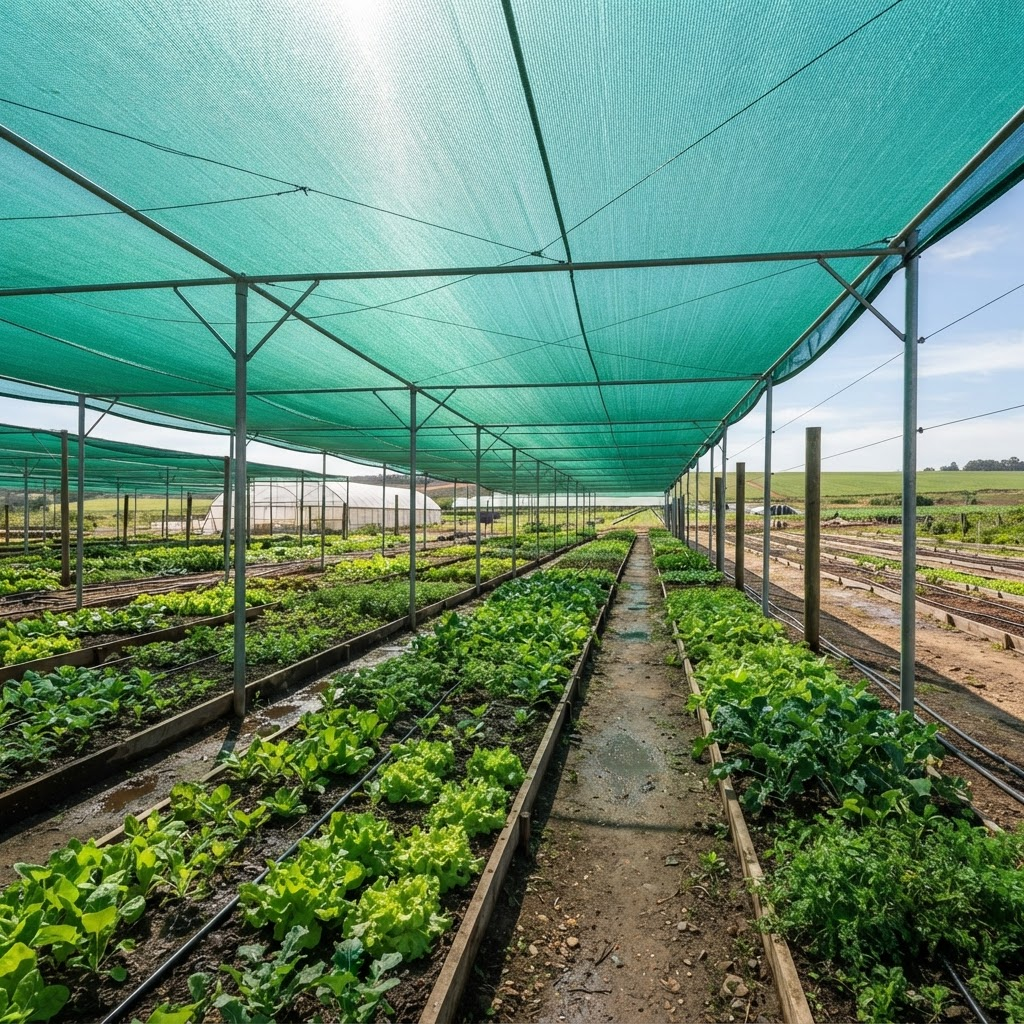
The Power of Shade Nets: Protecting Crops and Boosting Yield
In regions with intense sunlight and unpredictable weather, shade nets are a farmer's ally. These knitted HDPE covers filter sunlight, reduce heat stress, and protect crops from pests and hail. By regulating light and temperature, shade nets promote healthier plant growth and higher yields.
The global market underscores their importance. According to industry research, the agriculture nets market (including shade nets) is forecast to reach US$11.4 billion by 2026, driven by climate variability and the spread of protected cultivation. Shade nets specifically hold about 32% of this market in 2025, reflecting their widespread use in horticulture, floriculture, and livestock shelters worldwide.
Our Green Shade Net is made from 100% virgin HDPE with built-in UV stabilizers for long-lasting performance. It comes in various shade percentages to match crop needs. By controlling sunlight, it prevents leaf sunburn and excessive transpiration, effectively conserving soil moisture and fostering vigorous plant development.
Shade nets also improve working conditions and reduce operational costs. They provide UV protection for workers, making fieldwork safer and more comfortable. In open nurseries or even outdoor events, these nets help maintain stable ambient temperatures and reduce heat-related stress on both crops and people.
Overall, shade nets are a cost-effective climate-adaptation tool. They help farmers maintain consistent production even under harsh conditions. With rising concerns about climate change and food security, incorporating shade nets into agricultural practices is an increasingly smart strategy to safeguard yields.
Frequently Asked Questions
Why are shade nets used in agriculture?
Shade nets filter sunlight and protect plants from excessive heat, sunburn, and pest damage. They help maintain optimal growing conditions and reduce water loss from evaporation.
What material are shade nets made from?
Quality shade nets are made from UV-stabilized high-density polyethylene (HDPE) mesh. This material is durable, weather-resistant, and provides strong protection while allowing airflow.
How does shade net usage impact crop yield?
By regulating light and temperature, shade nets create an ideal microclimate for crops. Research shows that protected cultivation (using nets) can improve yield stability and reduce losses from extreme weather.
Explore Green Shade Net
Discover the right product for your application.